


XRP has gained 10% since the beginning of December, mirroring the broader market recovery. While many XRP holders are optimistic about further price increases, it’s essential to consider several factors that could hinder XRP’s momentum this month.
Here’s a closer look at these potential roadblocks.
Factors That Could Create New Selling Pressure on XRP in December
Recent data from CryptoQuant reveals a noticeable uptick in XRP Ledger Velocity, a metric that tracks the frequency of asset transfers across the network. This spike has reached levels not seen since the beginning of the year, indicating that XRP is actively traded rather than held securely in cold wallets for long-term investment. Increased velocity typically points to higher liquidity and strong market engagement, which may include large transactions facilitated by “whales,” or major investors.
Analyst CryptoOnchain notes that such surges often lead to significant price fluctuations. While the indicator itself is neutral, an abrupt adverse event could rapidly reverse XRP’s recent gains, pushing prices downward.
Moreover, negative trends are already apparent. There has been a notable increase in short positions, creating substantial selling pressure within the derivatives market. The funding rates currently lean negative, reflecting an increasingly bearish sentiment among traders. Notably, historical data indicates that a severe negative funding rate in April was a precursor to XRP falling below the $2 mark.
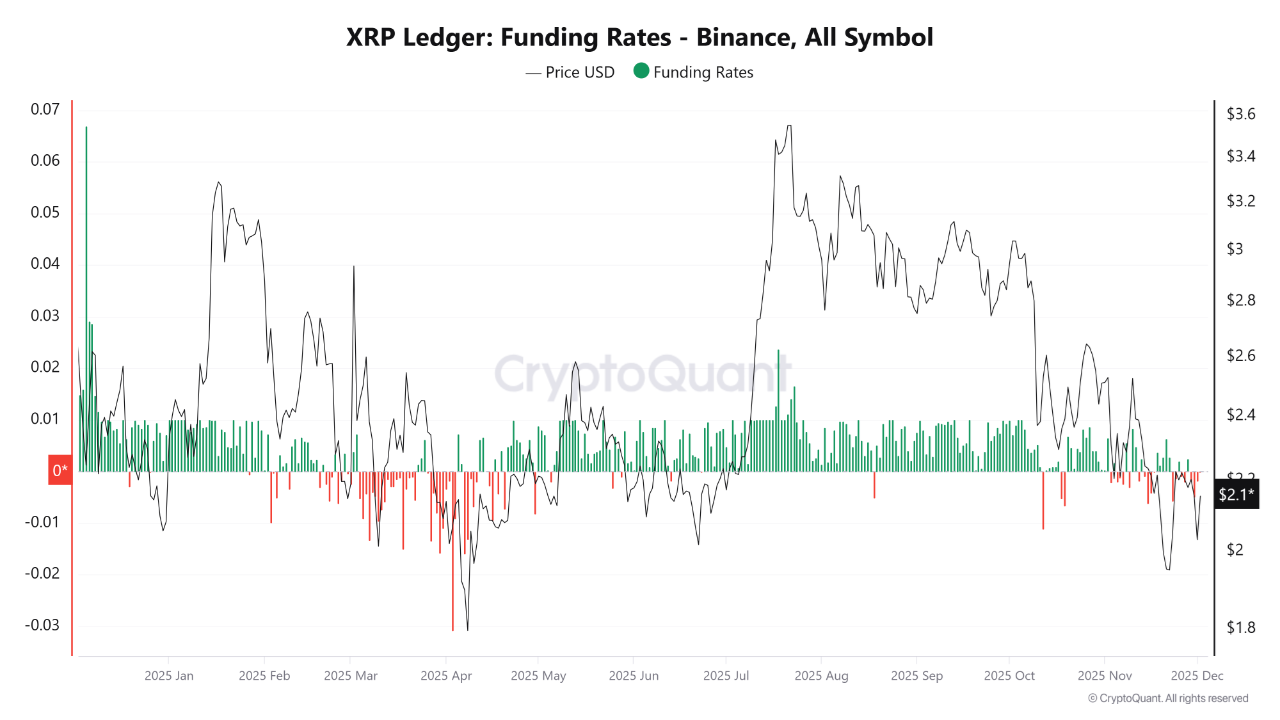
“As more traders pile into shorts in the derivatives market, the continuation of the trend becomes more likely, as persistent short pressure diminishes the appetite for opening long positions. In this environment, the probability of price retracing to the $2.0–$1.9 range increases,” predicts analyst PelinayPA.
Despite the rebound early in December, it appears insufficient to counteract the overall downward trend that has been present since July. PelinayPA’s perspective seems sensible given the current market climate.
Another source of potential selling pressure could stem from Korean investors. Data from CryptoQuant highlights that XRP balances on Upbit, a prominent South Korean exchange, have reached 6.18 billion, while Binance holds only 2.6 billion XRP. The substantial impact of Korean traders on XRP’s price movement cannot be overlooked.
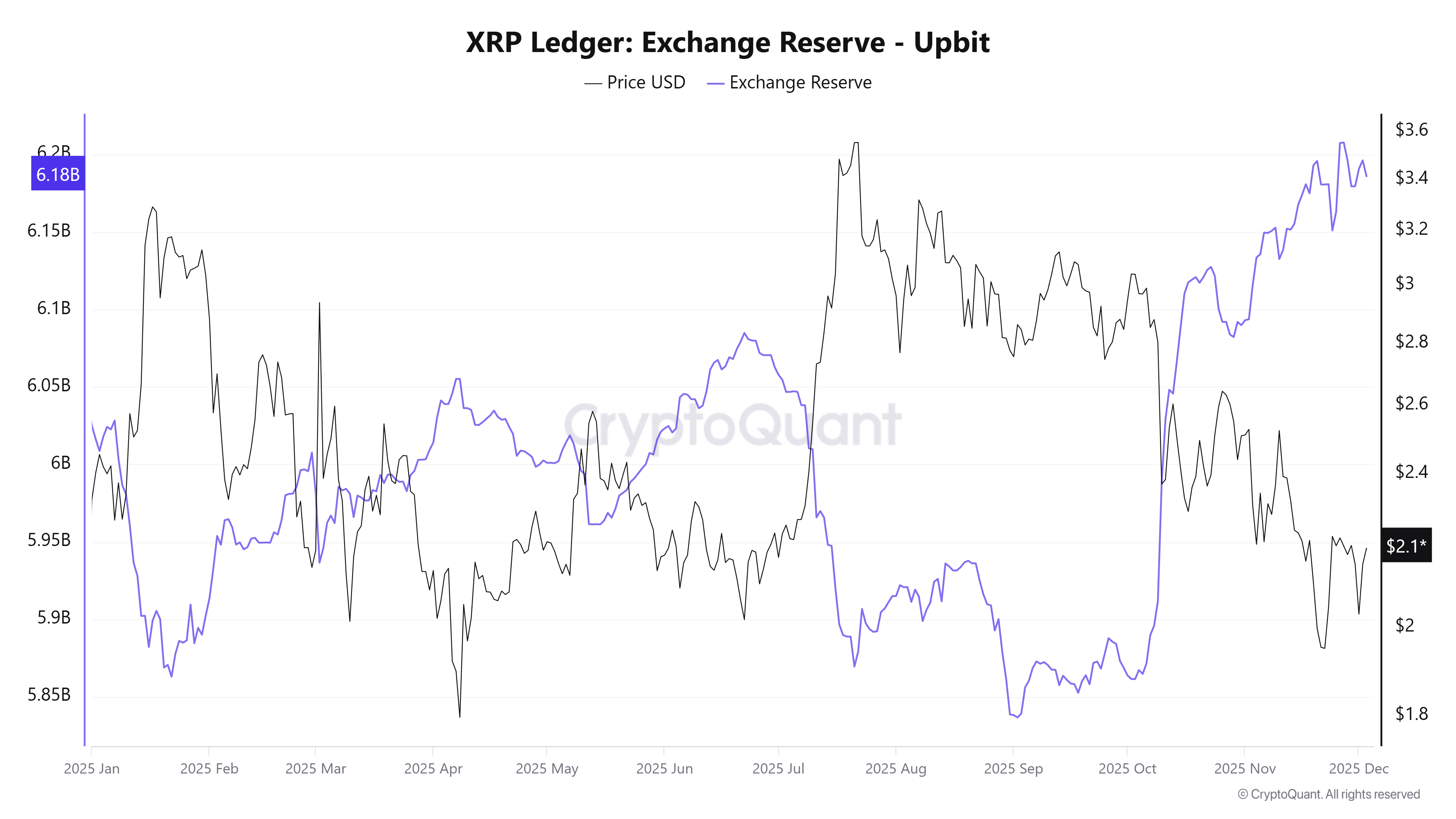
Interestingly, XRP reserves on Upbit have been on a steady increase for three consecutive months, now reaching their highest point for 2025. This continuous accumulation could lead to further selling pressure throughout December if investors decide to cash out.
Should Korean investors choose to sell — in combination with bearish trends from the derivatives market and rising Velocity metrics — XRP’s price may face significant downward challenges.
In contrast, XRP ETFs continue to present a robust counterweight to possible selling pressure. Recent data indicates that these ETFs have recorded positive net inflows for three consecutive weeks. Additionally, Vanguard’s recent decision to lift its multi-year crypto trading ban means that XRP ETFs will now be accessible for trading, starting in December.